Washington Yesterday Script Font for Handmade Branding
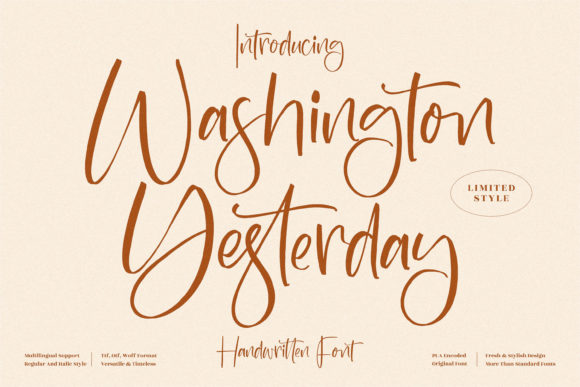
I was sitting at my desk last Tuesday, surrounded by a chaotic spread of wax scraps, dried lavender bundles, and half-finished candle labels, when I finally found the missing piece for my new summer collection. For weeks, I had been struggling to find a typeface that felt as warm and inviting as the scent of vanilla bean I was trying to capture. I needed something that didn’t look like it came from a standard corporate template but instead felt like it had been written by hand with genuine affection. That is when I pulled up Washington Yesterday. As soon as I typed out the first few letters on my mockup, the entire design shifted. It wasn’t just text anymore; it was personality. This lovely script font featuring charming, playful characters that seem to dance along the baseline instantly transformed my flat label design into something tangible and desirable.
If you are a maker who understands that typography is the voice of your brand, you know how crucial it is to choose the right visual language. Adding this font to your most creative ideas allows you to notice how it makes them stand out in a crowded marketplace. Whether you are designing digital downloads or cutting vinyl for tote bags, the right Script Handwritten style can elevate a simple product into a keepsake. In this guide, I want to share how I integrated Washington Yesterday into my workflow and how you can use these versatile Fonts to bring more joy and professionalism to your handmade shop.
Washington Yesterday for Candle Labels and Boutique Packaging
One of the most immediate ways I used Washington Yesterday was for my artisanal candle line. When creating product labels, readability must coexist with aesthetic charm. I tested several bold sans serif fonts, but they felt too rigid for the cozy vibe I wanted. The flowing nature of this handwritten font allowed me to write elegant product names like "Sunset Citrus" or "Midnight Jasmine" without sacrificing legibility. Because the characters have such a distinct bounce, they add a layer of visual interest that draws the eye across the label.
For boutique packaging, consistency is key. I paired the primary logo text in Washington Yesterday with a clean, minimal sans serif font for the ingredient lists and care instructions. This combination creates a balanced hierarchy: the script grabs attention and sets the mood, while the simpler font ensures customers can easily read safety information. When you print these on kraft paper stickers or glossy thermal labels, the contrast between the organic curves of the script and the structured details enhances the perceived quality of your product. Customers often comment on how "curated" a brand looks, and much of that comes down to thoughtful font pairing and cohesive design assets.
Washington Yesterday for Wedding Invitations and Stationery Sets
Stationery design requires a delicate touch, especially when working with weddings or formal events. I recently helped a friend design a welcome sign for her backyard wedding, and we chose Washington Yesterday for the main header. The playful yet refined strokes of the font struck the perfect balance between formal elegance and relaxed celebration. Unlike overly ornate calligraphy scripts that can be difficult to read from a distance, this font remains clear and accessible even when scaled up for large-format printing.
I also utilized this typeface for digital invitation templates sold in my shop. By offering Washington Yesterday in various weights and styles, designers can create customizable packages where buyers can change names and dates while maintaining the original artistic intent. The font’s natural rhythm works beautifully for addressing envelopes, writing RSVP cards, or adding decorative borders around menu items. When you provide clients with a comprehensive set of Fonts that include ligatures and alternates, you give them the tools to create a truly bespoke look. This level of detail reassures buyers that they are investing in a premium font capable of handling complex editorial design needs.
Washington Yesterday for Printable Wall Art and Digital Downloads
As a creator of digital products, I know that instant downloads need to make a strong impression before the customer even prints them. I designed a series of printable wall art pieces featuring motivational quotes and seasonal greetings using Washington Yesterday. The font’s ability to convey emotion through its shape means that even short phrases carry weight. For example, a simple word like "Gather" or "Blessed" looks significantly more inviting in this script than in a standard block lettering.
When preparing listing images for platforms like Etsy, high-resolution previews of the font in context are essential. I created mockups showing the text on framed canvas prints and layered over textured backgrounds to demonstrate versatility. Buyers love seeing how the characters interact with other elements. Since this is a creative font, it pairs exceptionally well with watercolor illustrations or minimalist line art. By showcasing the font in realistic home settings, potential customers can visualize how it will enhance their own spaces. This strategy not only highlights the aesthetic appeal of the typeface but also demonstrates its commercial viability for hobbyists looking to create quick, profitable decor items.
Washington Yesterday for Cricut Projects and Physical Merchandise
For those of us who use cutting machines like Cricut or Silhouette, font selection impacts both the design process and the final cut. Washington Yesterday translates beautifully into SVG files because of its clear vector paths. However, there are practical considerations when scaling the font down for small applications. I learned quickly that while the font shines on large signs or mugs, it requires careful spacing when applied to small sticker sheets or garment tags. The playful characters have varying stroke widths, so ensuring adequate kerning prevents the letters from merging together during the cutting process.
I have successfully used Washington Yesterday on heat-transfer vinyl for t-shirts, sublimation blanks for mugs, and even laser-engraved wooden signs. The font’s charm adds a personal touch to merchandise that feels handmade rather than mass-produced. When designing for physical products, always check the included file formats to ensure compatibility with your software. Using a reliable script font reduces the risk of jagged edges or broken lines in your cuts. Furthermore, verifying commercial font licensing is crucial if you plan to sell the finished physical goods. Knowing that your design assets are legally cleared allows you to focus on creativity rather than compliance.
Maximizing Readability and Brand Identity with Script Handwritten Styles
Ultimately, the goal of any branding effort is recognition and connection. Washington Yesterday offers a unique voice that helps brands stand out without shouting. Its handwritten quality fosters a sense of intimacy and trust, which is invaluable for small business owners building relationships with their audience. To get the most out of this typeface, experiment with different layouts. Try curving the text for circular logos, stacking words for badge designs, or using it as an accent alongside bold display fonts for contrast.
Remember to test your designs in black and white first to ensure the structure holds up without color support. This practice helps identify any awkward spacing or alignment issues early in the design phase. Whether you are crafting holiday tags, planner pages, or social media graphics, the consistent application of Washington Yesterday strengthens your brand identity. By treating typography as a core component of your product development, you create a cohesive experience that resonates with customers. Embrace the charm of this script, play with its dynamic shapes, and watch your creative projects come to life with renewed energy and purpose.